
Protoless Design: Vehicle Development Without Prototypes
A CAE-based development process that validates the whole vehicle in simulation — before a single prototype is built.
The problem with hardware-first development
Conventional development validates with hardware. Each design change discovered at prototype stage costs far more than one caught at concept stage — and prototypes arrive late by definition.
Protoless inverts the order. The vehicle is designed and validated top-down in simulation, so the expensive changes happen while they are still cheap.
Three approaches compared
| Conventional | Front-Loading | VTX Protoless | |
|---|---|---|---|
| Basis | Hardware test | CAD | CAE |
| Direction | Bottom-up | Bottom-up | Top-down |
| Initial data | CAD | CAD | Polygon (a fraction of CAD volume) |
| Analysis setup | Manual | Manual | Automated |
| Optimization | Commercial solver | Commercial solver | In-house MDO |
| Prototype fleet | Required | Required | Not required |
What Protoless does not skip
Protoless does not mean skipping validation. Every gate of the standard development process remains. What changes is the medium: database, automation, optimization, and virtualization replace physical iteration.
The full process, on a single EV truck
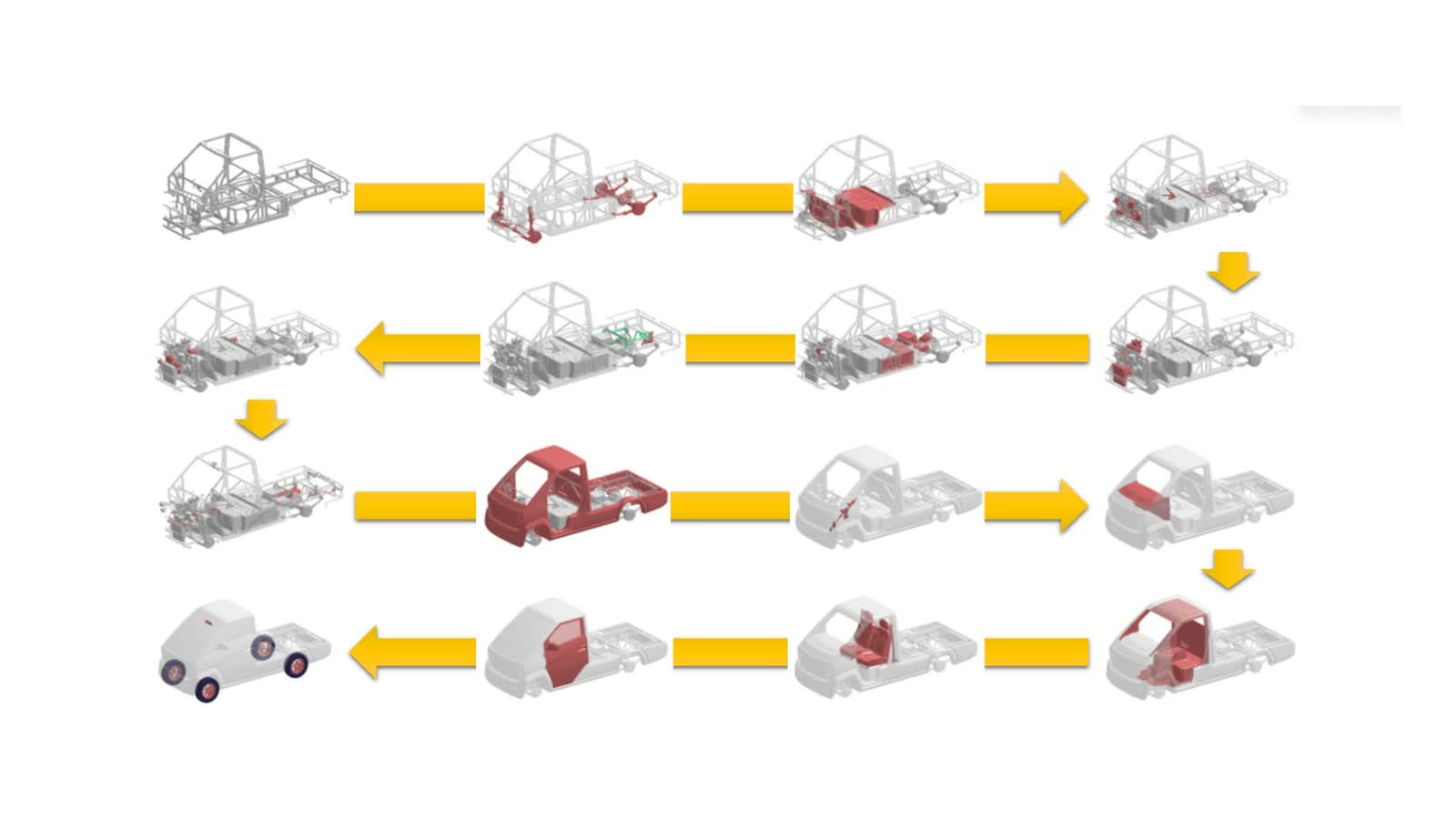
One 0.5-ton EV truck program runs the complete Protoless process from body structure through test driving. The same six steps apply to every program VTX develops.
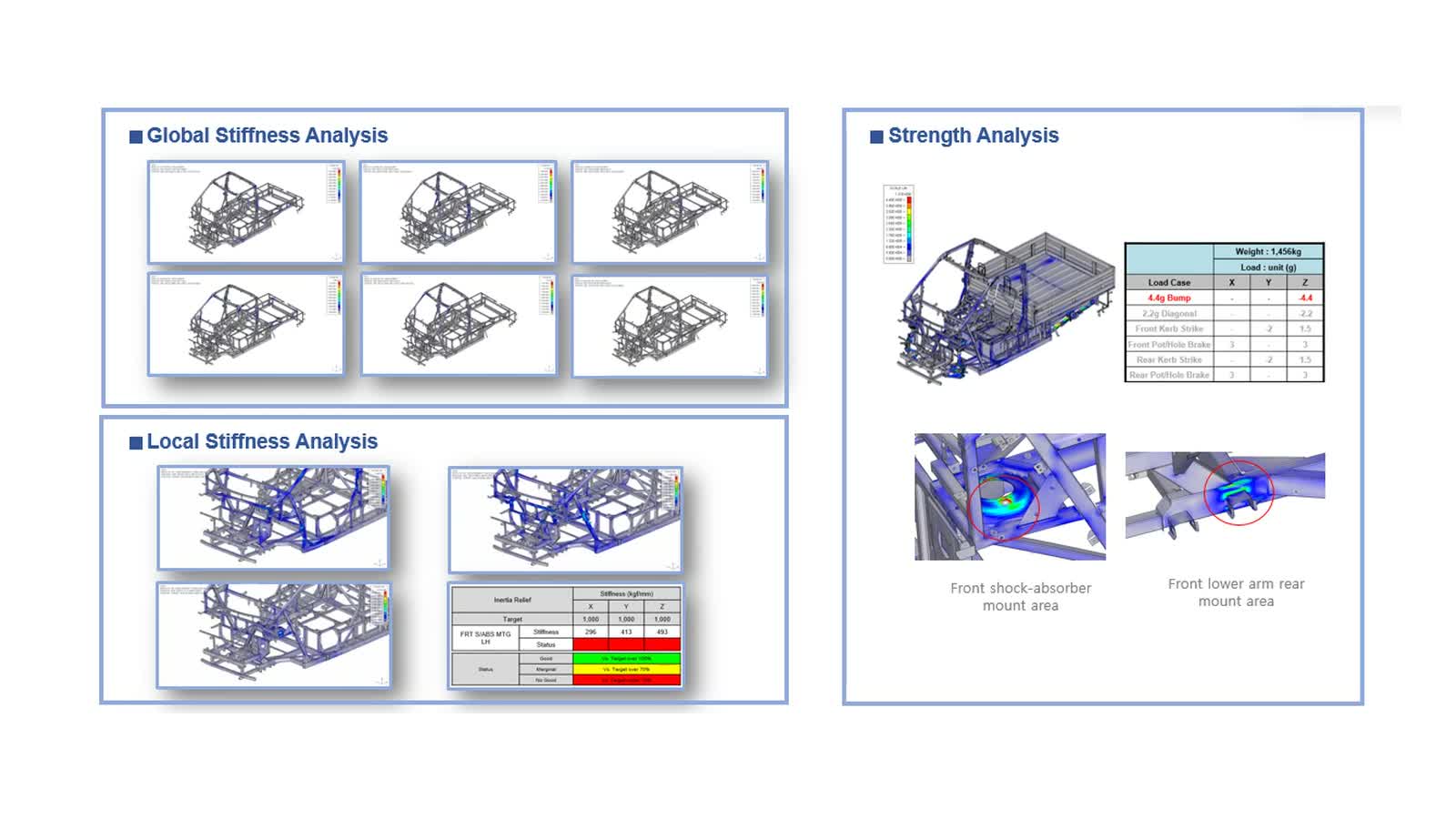
Structure Optimization
Global and local stiffness and strength analysis for a new body structure.
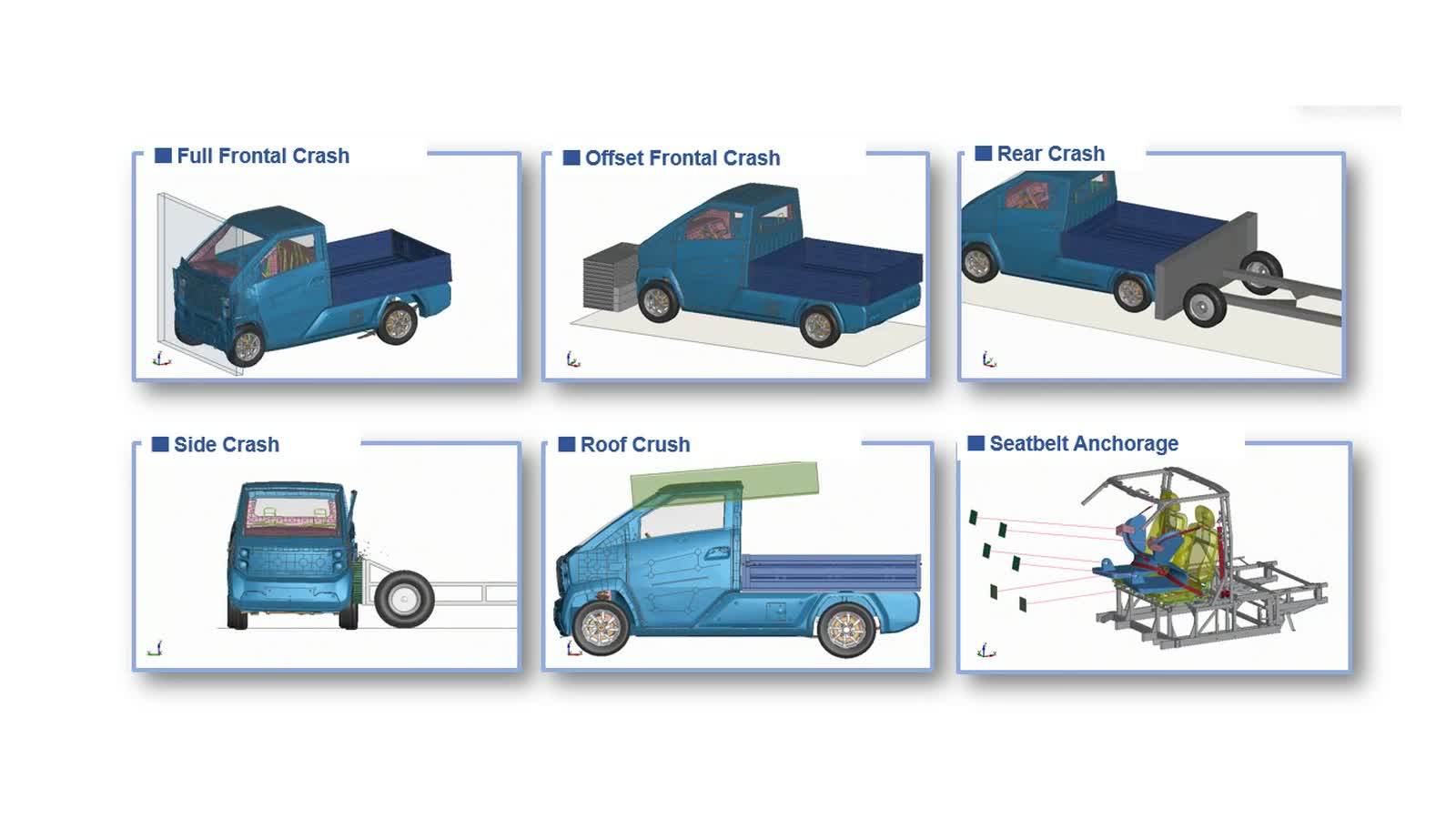
Crash Optimization
Full frontal, offset, rear, side, roof crush, and seatbelt anchorage.
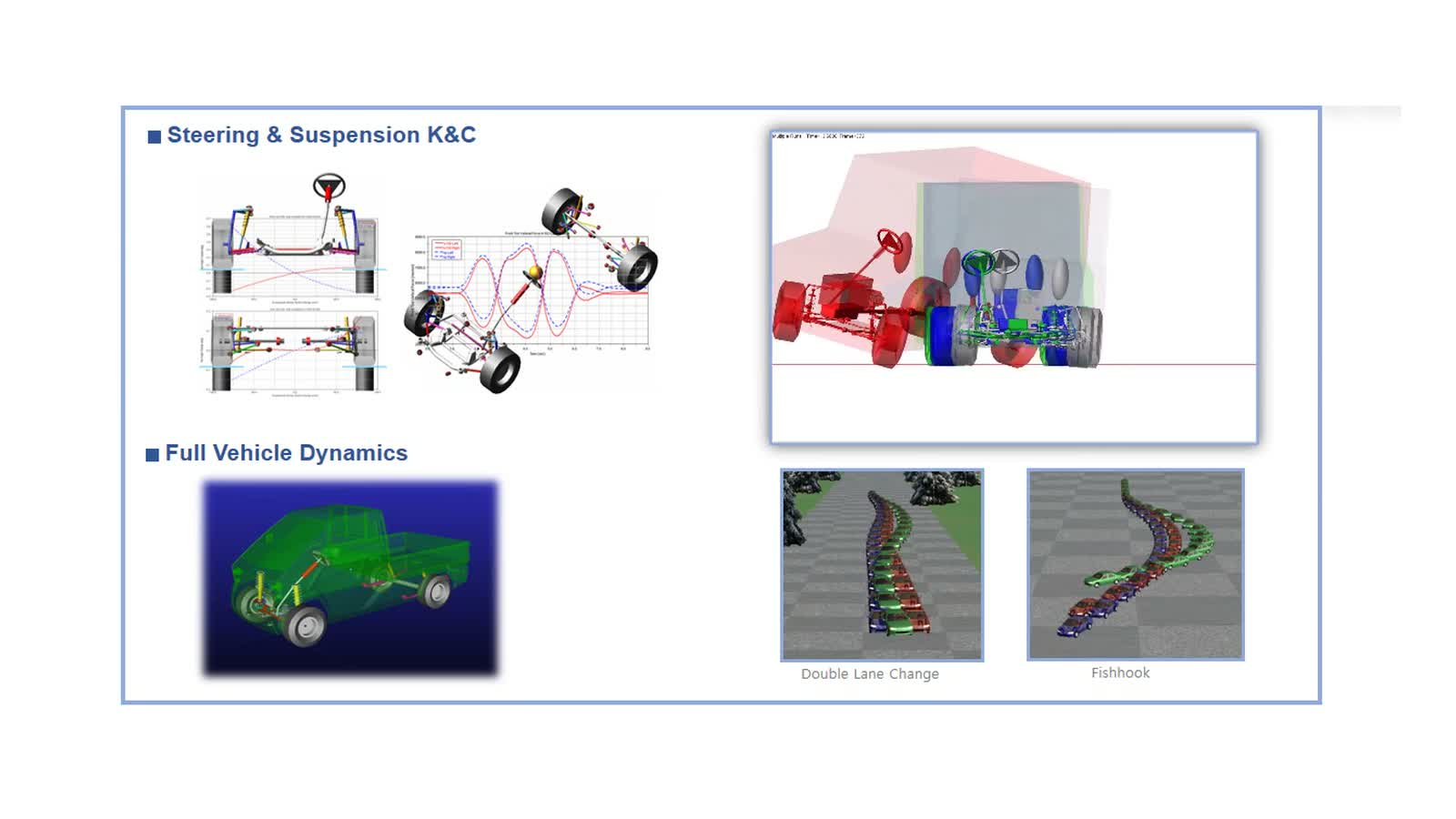
Dynamic Optimization
Steering and suspension K&C, plus full-vehicle dynamics — double lane change and fishhook.
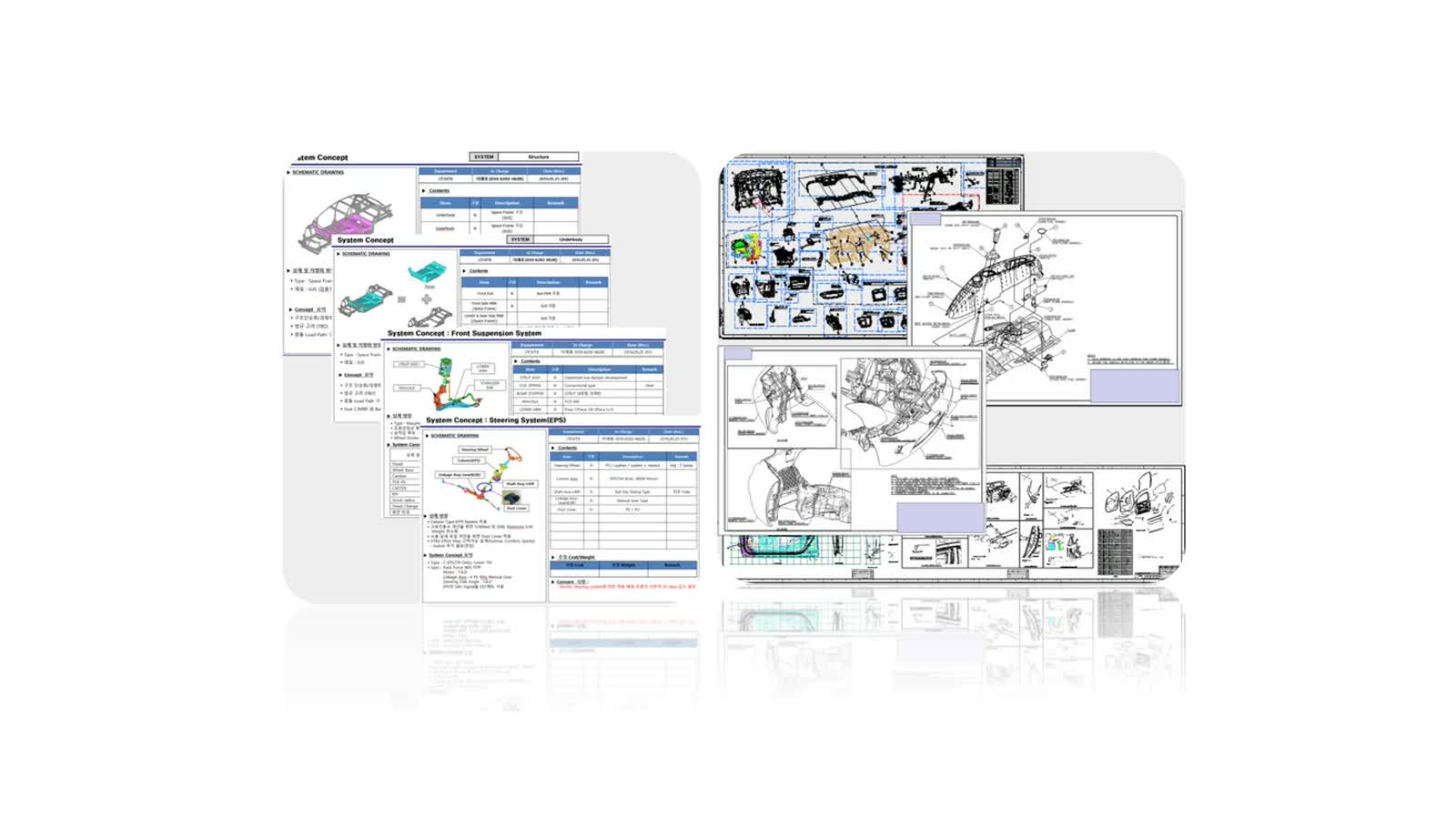
CAD Export for Manufacturing
System concept sheets to production CAD, extracted from the final FE model.
Building the Vehicle
Parts sourcing, simultaneous engineering, and an optimized assembly process.
Test Driving
Virtual driving and actual test driving, side by side.
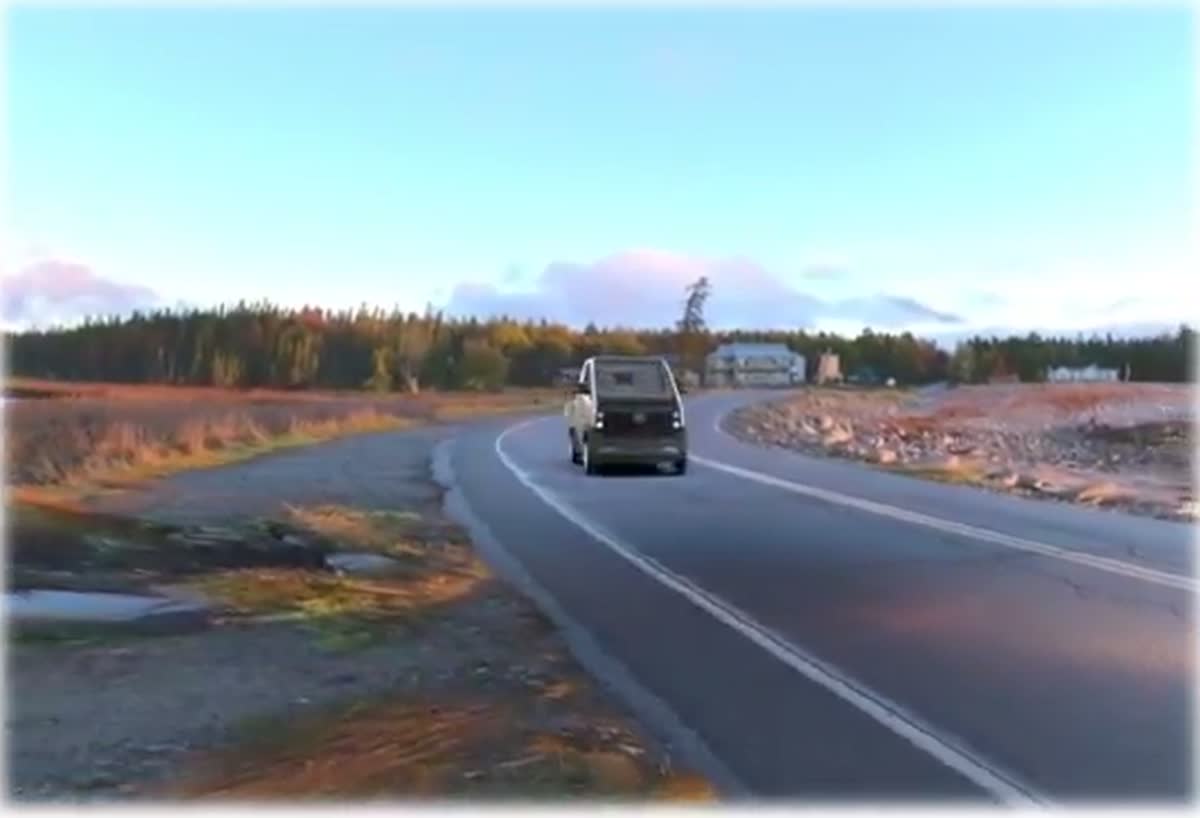 Virtual driving
 Actual test driving
Why the last step matters
Placing the virtual prediction next to the real test drive is the strongest evidence a simulation-based developer can offer: the vehicle was designed in CAE, and a real one drives. The 0.5-ton EV truck above is detailed further on Recent EV Developments.